Delhi 7000 kg adulterated khoya seizure: how to check festive sweets safely
The viral seizure figures point to a festive supply-chain problem, but consumers need context before judging every khoya seller or Diwali sweet.
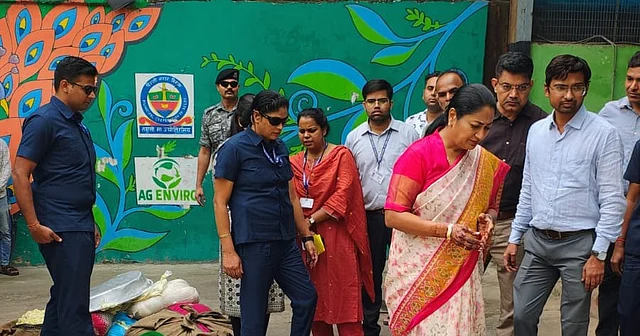
A festive-food crackdown in Delhi has produced two numbers that are now circulating widely: 7,000 kg of adulterated khoya seized at Turkman Gate, according to Chief Minister Rekha Gupta’s November 3 post, and more than 4,000 kg of unsafe khoya, paneer and sweets destroyed after 85 of 290 samples failed compliance checks. The figures describe related but apparently separate enforcement actions, not one confirmed total.
For shoppers buying laddoo, barfi, peda or milk cake for Diwali, the practical message is simpler than the viral posts: khoya that looks normal can still fail a laboratory test, and home checks can only flag suspicion—not prove safety.
Delhi 7000 kg adulterated khoya: what the evidence shows
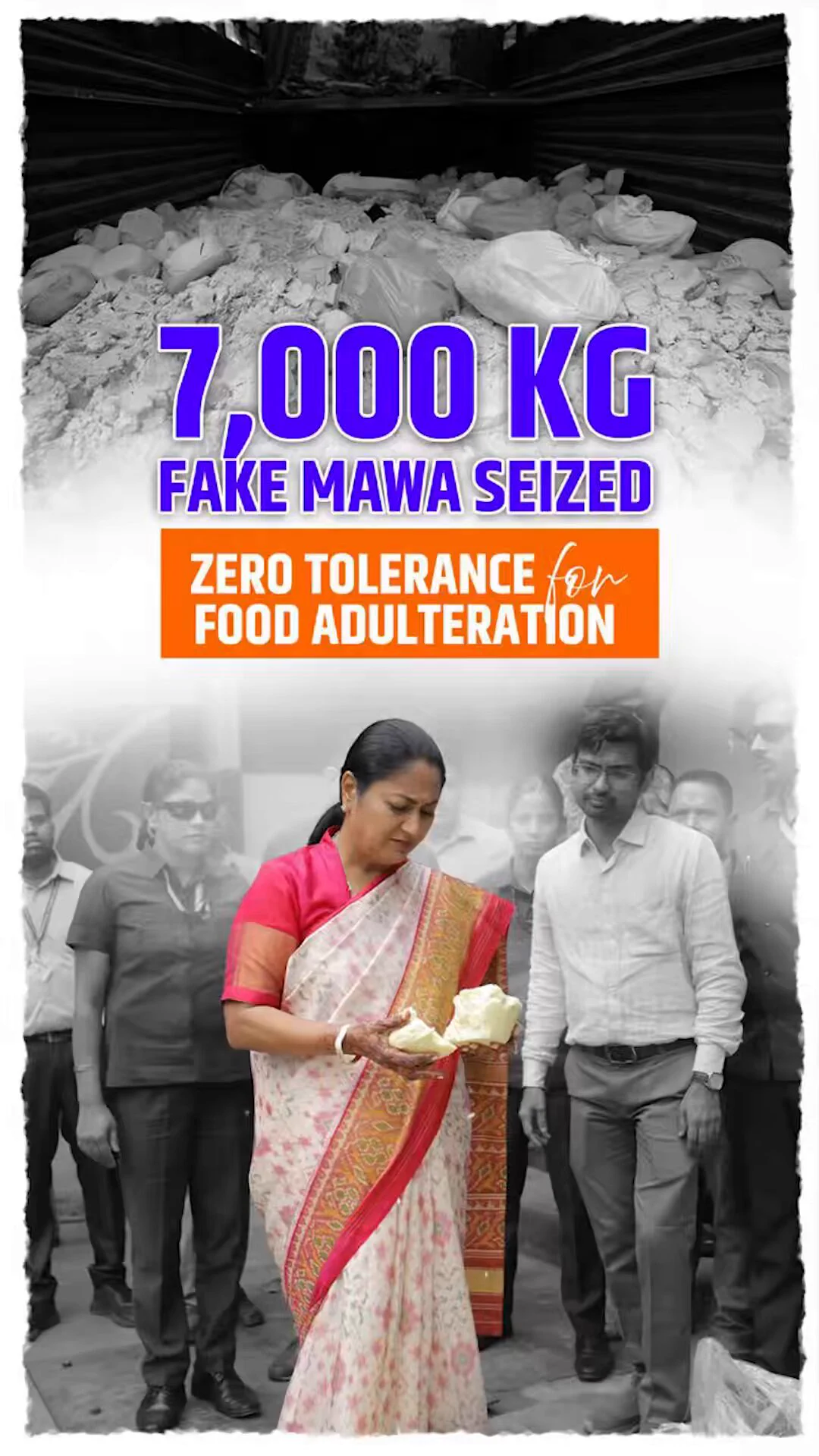
The Turkman Gate khoya seizure was reported after Rekha Gupta visited a food-safety operation on November 3. In her X post, the chief minister said officials had seized 7,000 kg of adulterated khoya and ordered strict legal action and intensified raids across Delhi.
New Indian Express reported that the material was seized and destroyed at the Mori Gate Khoya Market and described it as unhygienic and foul-smelling. Other coverage referred to the operation as taking place at Turkman Gate, suggesting that the location labels may refer to connected parts of the Old Delhi wholesale market area; the public reports reviewed do not provide a detailed seizure memo to reconcile that point.
A separate Delhi Food Safety Department enforcement update, reported by PTI and Millennium Post on October 30, covered the previous two months. It said officials tested 290 samples, of which 85 were unsafe or below prescribed standards, and destroyed more than 4,000 kg of khoya, paneer, sweets and other dairy products.
Those numbers should not be added together. The 7,000 kg figure is a specific seizure highlighted by the chief minister, while the 4,000-plus kg figure is a separate two-month destruction tally covering several food categories. Neither set of reports publicly establishes how much the actions overlap, what proportion was khoya, or how many samples came from the 7,000-kg consignment.
The 85 failed samples represent about 29.3% of the 290 tested samples, but that is not a prevalence estimate for all Delhi sweets. Enforcement teams target high-risk locations and suspected products, so the sample is not random.
Delhi khoya adulteration Diwali: what may be wrong
Khoya, also called mawa, is concentrated milk solids. It is widely used in Indian sweets, but its high moisture, fat and protein content also make it vulnerable to poor handling, substitution and dilution.
Possible problems include:
- Non-milk solids: starches or other fillers may be added to increase bulk.
- Lower-cost fat: vegetable fat or other fats may be used in place of milk fat.
- Excess water: this can increase weight while weakening the product.
- Poor hygiene: contaminated equipment, transport or storage can make food unsafe even when no deliberate adulterant is present.
- Spoilage: khoya kept warm for long periods can develop sour or rancid odours.

A failed sample does not automatically mean that every product from a shop or market is adulterated. “Unsafe” and “below prescribed standards” can cover different laboratory findings, and the exact violation depends on the test report.
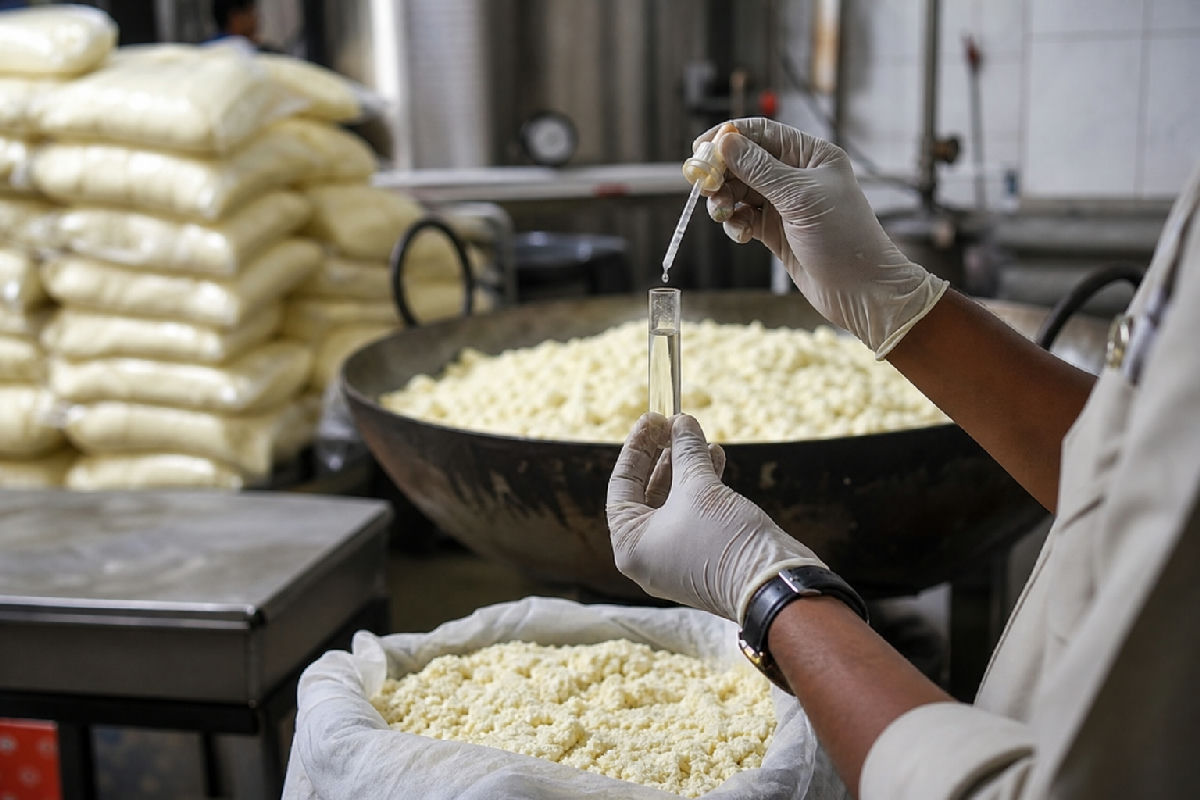
The Food Safety and Standards Authority of India sets standards for milk products and sweets. Under India’s food-safety framework, enforcement officers collect official samples and send them for laboratory analysis; visual inspection alone cannot establish compliance.
How to identify adulterated khoya before buying
No household test can certify khoya as safe. Use these checks as warning signs, then rely on a reputable seller, cold-chain handling and official testing where a complaint is necessary.
- Check the smell first. Fresh khoya should have a clean, characteristic milk aroma. A sharp sour, chemical, rancid or unusually weak smell is a reason not to buy it.
- Examine the texture. Genuine khoya is generally smooth and cohesive, though texture varies by type and preparation. Excessively rubbery, gritty, oily or unusually sticky khoya deserves caution.
- Look for abnormal colour. Khoya is typically white to cream or pale brown depending on cooking. Unusual bright whiteness, grey patches, mould or uneven discolouration are red flags.
- Do not trust the taste test. Tasting raw khoya or a suspicious sweet can expose consumers to contaminated food. Children, pregnant people, older adults and those with weakened immunity should be especially cautious.
- Treat viral iodine tests as screening only. A blue colour after iodine may indicate starch, but a home result is not a legal or complete adulteration test. Do not handle laboratory chemicals such as hydrochloric acid at home.
- Ask when it was made. Prefer sweets made recently and stored under appropriate conditions. Avoid trays sitting uncovered near traffic, dust, heat or repeated handling.
- Demand basic traceability. For packaged khoya or sweets, check the manufacturer or seller details, batch or lot information, date marking, ingredients, FSSAI licence number and storage instructions.
- Buy less and keep it cold. Purchase from a shop with high turnover, refrigerate perishable sweets promptly and follow the seller’s use-by guidance. Do not leave milk-based sweets at room temperature for hours.
What Delhi’s crackdown means for shoppers
The risk is concentrated, not universal. The enforcement action identified problems in inspected supply chains; it does not show that all khoya or all Delhi sweet shops are unsafe.
Appearance is a weak safeguard. Some adulteration and microbiological contamination are invisible, while a product can look unattractive yet still require laboratory confirmation before being legally classified as adulterated.
Festive demand raises the stakes. During Diwali and other festivals, production and distribution accelerate. Consumers should be more careful about freshness, storage and seller turnover, not assume that a busy shop is automatically compliant.
The sample-failure figure needs context. Eighty-five failures out of 290 tested samples is a serious enforcement signal, but it cannot be converted into “one in three sweets in Delhi is adulterated.” The sampling method, product-by-product breakdown and laboratory findings would be needed for that conclusion.
Complaints should preserve evidence. Keep the bill, packaging, photographs, batch details and leftover product sealed and refrigerated if possible. Report suspected food-safety violations through the relevant Delhi food-safety authorities rather than relying only on a social-media post.
A five-minute festive-sweets checklist
- Choose the outlet: Prefer established shops with clean counters, covered products, refrigeration and visible licence information.
- Inspect the sweet: Reject products with mould, slime, abnormal odour, leaking syrup or excessive sweating.
- Ask the right questions: Find out whether the sweet contains khoya, how fresh it is and how it has been stored.
- Buy a modest quantity: This reduces exposure if the product spoils and lets you assess freshness before buying more.
- Store safely: Refrigerate milk-based sweets promptly, use clean utensils and avoid keeping them at room temperature for prolonged periods.
- Stop eating if symptoms develop: Vomiting, diarrhoea, severe abdominal pain or signs of dehydration need medical attention, particularly in vulnerable people.
- Report with proof: Submit the seller name, address, purchase date, bill, packaging and photographs to food-safety officials.
The Delhi operation is a warning about oversight and supply chains, not proof that every festive sweet is dangerous. The safest consumer decision is to combine a reputable seller with freshness, refrigeration and restraint—and to treat any home adulteration trick as preliminary, never definitive.
Frequently Asked Questions
What happened in the Delhi 7000 kg adulterated khoya case?
Delhi Chief Minister Rekha Gupta said on November 3 that 7,000 kg of adulterated khoya had been seized during a crackdown linked to the Turkman Gate market area. Reports describe the seized material as unhygienic and foul-smelling, but the public reports do not provide a complete laboratory breakdown or seizure document.
Is the 7,000 kg seizure the same as the 4,000 kg destroyed?
The available reports indicate separate figures. The 7,000 kg number refers to the specific seizure highlighted by the chief minister, while the 4,000-plus kg figure covers two months of destroyed khoya, paneer, sweets and other products; the reports do not establish whether any quantities overlap.
How can I identify adulterated khoya at home?
Check for an abnormal smell, mould, unusual colour and an excessively rubbery, gritty or oily texture, but do not treat these checks as proof. Laboratory testing is required to confirm many forms of adulteration, and tasting suspicious khoya is not recommended.
Should I stop buying khoya or Diwali sweets?
There is no evidence in the cited reports that all khoya or all Delhi sweet shops are unsafe. Buy from clean, established outlets, check freshness and storage, keep milk-based sweets refrigerated and retain the bill if you need to report a concern.
What did the Delhi food-safety checks find?
Officials reportedly tested 290 samples during a two-month enforcement drive, with 85 described as unsafe or below prescribed standards. More than 4,000 kg of khoya, paneer, sweets and other food products was destroyed, but a product-by-product breakdown was not provided in the reports reviewed.