Soya chaap factory viral video: what’s real, what’s fake, and how to stay safe
A disturbing soya chaap clip claiming to show a Noida Sector 27 factory has horrified India. But its location is unverified. Here’s what’s real, what’s misinformation, and how to choose safer chaap.

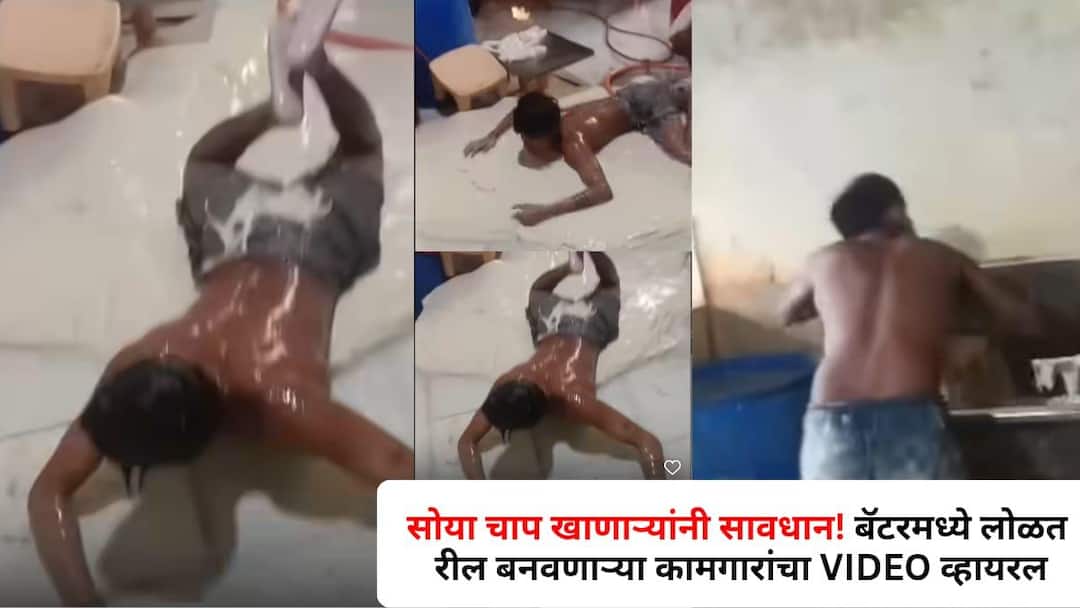
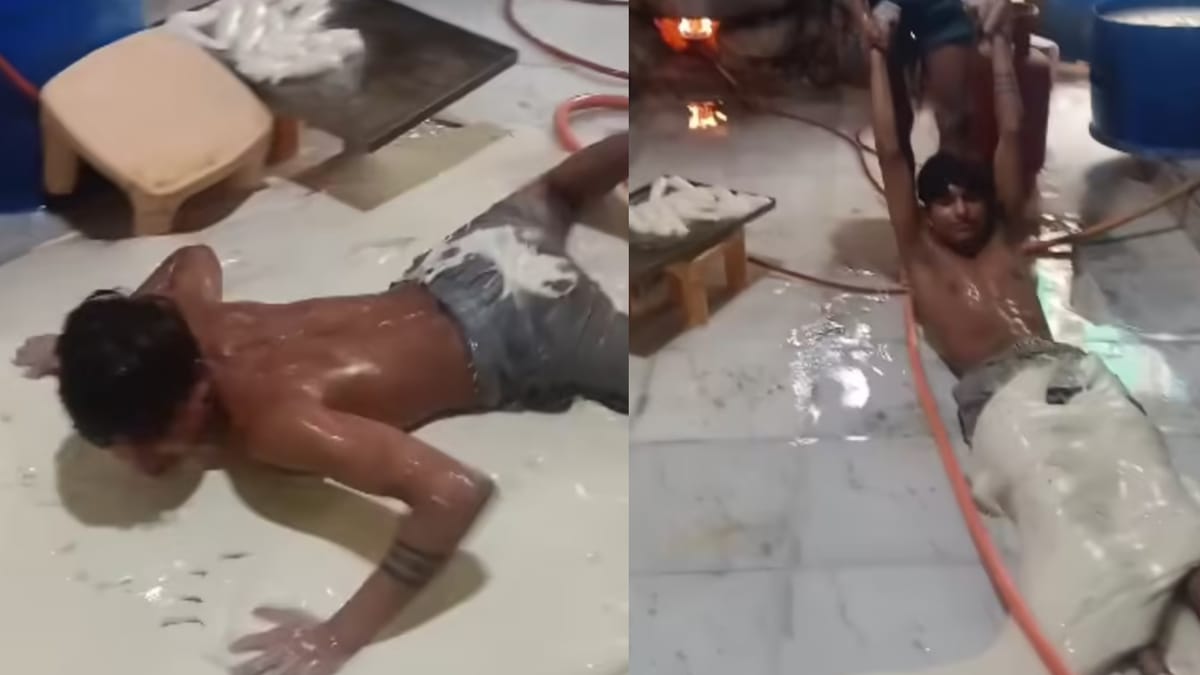
A shirtless worker is dragged across a pale, sticky mass spread on a grimy floor. Other men laugh and pull him back and forth as his body rolls through the goo, bare feet trampling the mixture. In the background, someone shapes the same dough into pieces that look disturbingly like soya chaap.
Within days, this soya chaap factory viral video was everywhere – Instagram reels, X (Twitter), WhatsApp forwards, YouTube explainers, and Google Trends. Posts claimed it showed a soya chaap unit in Noida Sector 27, and comments demanded that FSSAI raid the premises.[1][2][4][10][11]

But there’s a crucial problem: no authority has confirmed where or when this clip was filmed, and food officials in Gautam Budh Nagar say they could not find any such unit in Noida at all.[1][2][7][9]
This investigation breaks down what the video really shows, what we do know, what social media gets wrong – and, most importantly, how to tell if soya chaap is safe to eat after the viral video.
Soya chaap factory viral video: what the clip shows, and what we actually know
The clip that sparked outrage runs for less than a minute but packs in multiple hygiene shocks.[1][2][4][10][11]
According to coverage by Times of India, Moneycontrol, Asianet Newsable and others, the video shows:[1][2][4][10][11]
- A shirtless worker crawling or being dragged across a large spread of white batter on a dirty floor.
- Other workers walking barefoot on the same floor and around the dough.
- One person spraying water over the man and/or batter as he rolls through it.[2][4][10]
- Soya chaap–like pieces being prepared nearby, with no visible basic hygiene measures.[4][10][11]
Social media captions and several news headlines have asserted that the video is from a soya chaap facility in Noida Sector 27, Uttar Pradesh.[2][4][8][9][10][11] Some posts claim it is a “factory”, others call it a “shop” or “manufacturing unit”.[4][10][11]
However, when you look beyond the captions, the facts are far thinner.
Location and date: Noida, Agra, Aligarh – or something else?
Multiple outlets explicitly note that the location and date of the video remain unverified:[1][2][3][5][7][9]
- Moneycontrol: “The authenticity of the video and its location could not be independently verified… No official agency has confirmed where or when the video was recorded.”[2]
- Times of India: “No official agency has confirmed where or when the video was recorded… several media reports suggest the footage is not recent and may actually be an older video from Agra that has resurfaced with a fresh claim linking it to Noida.”[1][3]
- TV9 Hindi and other Hindi-language reports repeat that while it is claimed to be from Noida, the food department has not confirmed this.[7][9]
The most specific fact-check style detail comes from one Hindi report citing a Gautam Budh Nagar food department official:[7]
- After the video surfaced, the department reportedly activated all teams to investigate.
- They searched across the district but “could not find any such factory or incident”, nor any evidence proving the video is from Noida.[7]
- The official added that the same video had earlier gone viral as being from Aligarh and Agra, and the department’s view is that “this viral video is not from Noida”.[7]
In short:
- The “Noida Sector 27 soya chaap clip original” claim is unproven and likely incorrect.[1][2][3][7][9]
- The video appears to be older footage that has resurfaced multiple times with new, shifting location claims – Agra, Aligarh, now Noida.[1][3][7]
What authorities have – and haven’t – done so far
Across reports, one pattern is clear: officials are aware of the video and public anger, but no agency has yet publicly confirmed the site or taken direct enforcement action based solely on this clip.[1][2][5][7][9]
- Media accounts say local food safety teams in Gautam Budh Nagar conducted checks after the Noida claim surfaced, but found no matching facility.[7][9]
- Moneycontrol notes that “no official agency has confirmed whether the footage was filmed at the claimed location or taken action based on the visuals.”[2]
- Several explainers emphasize that any regulatory response must be based on verified evidence, not just a viral reel.[1][2][3][5]
There is also no public statement yet from FSSAI specifically naming this video or unit, and no confirmed closure order reported in mainstream media as of late July 2026.[1][2][5][7][9]
That does not mean food safety laws are powerless. It means this particular “soya chaap batter man dragged real location” story is still under verification, and agencies are cautious about acting on unverified social clips.
Why the video still matters: genuine hygiene risks behind the outrage
Even if the exact location is unconfirmed, the hygiene violations shown in the clip are real and severe.
The actions visible would break multiple core principles of food safety:
- Contact with bare skin and clothes: Using a man’s body to roll or knead food batter would be prohibited in any regulated facility, because human skin, hair and sweat can carry bacteria and other contaminants.
- Floor-contact food preparation: Spreading batter directly on a potentially dirty floor is a major contamination risk – floors can host pathogens from shoes, dust, pests and cleaning runoff.
- Barefoot workers, lack of protective gear: Working barefoot and shirtless around open food contradicts basic hygiene norms meant to control physical, microbial and chemical hazards.
While the clip itself has not been formally authenticated, experts featured in TV, YouTube and news coverage note that it starkly illustrates the gap between what food safety laws require and how some unregulated or informal units may operate.[3][5][10][12][13]
The outrage, then, is not just about one mystery location. It taps into a larger anxiety: are popular street foods and chaap units regulated, and how can consumers tell which ones are safe?
Are soya products and chaap units regulated in India?
The legal framework: FSSAI and state food safety departments
In India, almost all food businesses – from big packaged brands to small shops – fall under the Food Safety and Standards Authority of India (FSSAI) and the state food safety departments.
Key points:
- Any establishment that manufactures, processes, stores, distributes or sells food is required to obtain either a FSSAI registration or licence, depending on its size and turnover.
- This includes soya chaap manufacturing units, cold storage facilities, restaurants, street food stalls, and branded products sold in retail packs.
- State food safety officers are empowered to inspect premises, collect samples, issue improvement notices and, in serious cases, suspend licences or prosecute.
Most mainstream explainers on the viral video stress that if its location were confirmed, the unit could face action under these laws for gross unhygienic practices and adulteration.[3][5][10][12][13]
The reality gap: informal units and poor enforcement
The problem is not that soya chaap is unregulated as a food category. It’s that enforcement can be patchy, especially for:
- Small, informal factories making unbranded products.
- Units operating without proper registration or licences.
- Back-end facilities supplying bulk chaap to street vendors, dhabas and small restaurants.
Several reports on the video and subsequent debates note that it has reignited calls for more frequent inspections, better tracking of supply chains, and stricter penalties for hygiene violations.[1][2][4][5][10]
In other words, the system exists – but implementation and oversight are uneven, and consumers rarely see what happens behind the scenes.
Is soya chaap safe to eat after the viral video?
The question dominating Google searches – “is soya chaap safe to eat after viral video” – doesn’t have a simple yes/no answer. Instead, it depends on where the chaap comes from and how it is made.
1. Packaged, branded soya chaap
If you buy packaged soya chaap from established brands in supermarkets or major online platforms, the product is much more likely to be made in regulated facilities:
- Large manufacturers typically need FSSAI licences, periodic inspections, and compliance with labelling and hygiene norms.
- Packaged products carry FSSAI licence numbers, batch codes and manufacturing details, which make them traceable.
This does not guarantee perfection, but the risk profile is different from an anonymous bulk unit whose location is unknown.
2. Local shops and street vendors
The higher risk zone is often:
- Local, unbranded soya chaap supplied by small units you never see, and
- Vendors buying bulk chaap from such units and grilling or serving it roadside.
If a shop or vendor cannot show a FSSAI registration or licence, or if their handling and storage are visibly unhygienic (flies, dirty floors, uncovered food, re-used oil), your risk increases.
The viral clip probably resonates because many viewers suspect that similar unregulated practices could exist elsewhere, even if this exact video’s location is unclear.[1][2][4][5][10]
3. What the video doesn’t prove
The most important corrective to viral misinformation is this:
- The clip does not prove that all soya chaap in Noida – or India – is made this way.
- It does not confirm that the unit is in Sector 27, that it is currently operating, or that the footage is recent.[1][2][3][7][9]
Treat it as a warning about worst-case hygiene, not as a blanket verdict on every chaap outlet.
FSSAI action on soya chaap factory video: what could and should happen
Many posts have tagged FSSAI and state officials, demanding “fssai action on soya chaap factory video”.[1][2][4][5][10]
Here’s what meaningful action looks like – and why it takes more than outrage.
Step 1: Verify location and identify the unit
Before any legal enforcement, authorities must:
- Confirm where the footage was filmed.
- Identify the business entity operating the unit.
- Establish when the clip was recorded (ongoing practice vs old incident).
As noted earlier, investigations in Gautam Budh Nagar reportedly found no matching unit in Noida, leading officials to doubt the Noida claim.[7]
Step 2: Inspect under food safety laws
Once identified, officers can:
- Inspect the premises for current hygiene conditions (even if practices have changed since the video was filmed).
- Take samples of products for laboratory testing.
- Review registration/licence status, documentation and records.
Depending on findings, actions may include warnings, improvement notices, suspension of licence, seizure of unsafe products, or prosecution under the Food Safety and Standards Act.
Step 3: Systemic follow-up
The bigger opportunity is to use the public attention to:
- Launch targeted drives checking soya chaap units and similar small factories.
- Improve consumer awareness about checking licences and hygiene.
- Encourage whistleblowing and confidential reporting of suspicious units.
Several commentators in explainers around the video argue that such clips should trigger systemic reforms, not only one-off raids.[3][5][10][12][13]
How to identify safer soya chaap brands and outlets
The viral clip is a wake-up call for consumers to look beyond taste and price.
Here are practical steps you can take.
For packaged soya chaap
When buying from retail shelves or online:
- Check the FSSAI licence number
- It should be printed on the pack; you can verify it using official FSSAI resources.
- Look for manufacturer details
- A full address, batch number, manufacturing and expiry dates indicate traceability.
- Prefer reputable, transparent brands
- Brands that share factory photos, audits or certifications offer more visibility than anonymous labels.
For restaurants, dhabas and street vendors
Before ordering that plate of malai chaap:
- Look for FSSAI registration at the outlet
- Many eateries display their FSSAI licence or registration copy near the counter or kitchen.
- Observe handling and storage
- Is raw chaap stored chilled, covered and away from dust?
- Are workers wearing clean clothes, possibly gloves or caps, and working on clean surfaces?
- Ask about the supplier
- If they can name a known brand or provide supplier details, that’s better than “we just get it from a local factory somewhere”.
- Trust your senses
- Off smells, unusual texture, extreme stickiness or discolouration can be signs of poor quality or contamination.
If things look wrong, walk away. Food safety is not negotiable.
What this viral clip gets wrong – and what it gets right
The soya chaap factory viral video is powerful precisely because it feels plausible – the kind of nightmare consumers imagine but rarely see.
But as it spreads, several misleading narratives have taken hold:
- That the unit is definitively in Noida Sector 27 – not verified and likely false.[1][2][3][7][9]
- That all soya chaap in Noida or India is made this way – unsupported and unfair.
- That authorities have ignored the incident – when in fact local food teams have reportedly tried to trace the unit but failed, suggesting the clip is mislabelled or old.[7]
At the same time, the clip gets one big thing right: it shines a harsh light on how badly things can go wrong when hygiene is treated as a joke.
If you take one lesson from this saga, let it be this: do not rely on viral captions to judge safety, but do use them as a reminder to pay closer attention to where your food comes from.
Frequently Asked Questions
Where was the soya chaap factory viral video actually shot?
Media reports say the video is claimed to be from a soya chaap unit in Noida Sector 27, but no official agency has confirmed this.[1][2][7][9] A Gautam Budh Nagar food department official reportedly stated that investigations found no such factory in Noida and that the same clip had previously circulated as being from Agra and Aligarh, so the department believes it is not from Noida.[7]
Is soya chaap safe to eat after the viral video?
The video does not mean all soya chaap is unsafe; it shows one extreme case of unhygienic preparation whose location and date remain unverified.[1][2][3][7][9] Packaged branded products and outlets with proper FSSAI licences and visible hygiene practices are generally safer, while anonymous, unregulated units and visibly dirty shops carry higher risk.
Did FSSAI take action on the soya chaap factory video?
As of late July 2026, there is no widely reported, specific FSSAI enforcement action publicly linking to this exact video.[1][2][5][7][9] However, local food safety teams in Gautam Budh Nagar reportedly conducted checks and found no matching unit in Noida, highlighting the challenge of acting on unverified social media clips.[7]
How can I identify safe soya chaap brands and outlets?
Look for FSSAI licence numbers and full manufacturer details on packaged products, and prefer reputable brands sold through major retailers. At restaurants or street vendors, check for FSSAI registration displays, observe hygiene (clean surfaces, covered food, proper storage), and avoid outlets where handling or cleanliness looks clearly poor.
Does the video prove Noida Sector 27 soya chaap is unsafe?
No. The Noida Sector 27 soya chaap clip original claim has not been verified by any official authority, and a local food department official has explicitly said they found no evidence the video is from Noida.[1][2][7][9] It highlights potential hygiene risks but does not prove that all or even most soya chaap in Noida is made this way.