Supreme Court vs FSSAI on warning labels: what it means for your snacks
As the Supreme Court questions FSSAI over delayed front-of-pack warnings, here’s how India’s junk food labelling war hits your daily chips, biscuits and colas.
The courtroom was silent for a moment before Justice J.B. Pardiwala leaned into his microphone and asked the question now ricocheting across news channels and WhatsApp groups: “Are you under corporate pressure?” The question was aimed at India’s food regulator, the Food Safety and Standards Authority of India (FSSAI), and it went to the heart of a fight over how much Indians deserve to know about the junk food they eat.
On 13 August 2026, in what is already being called the “Supreme Court FSSAI warning labels case”, a bench of Justices J.B. Pardiwala and K.V. Viswanathan sharply criticised FSSAI for dragging its feet on front-of-pack warning labels for packaged foods high in sugar, salt and saturated fat.
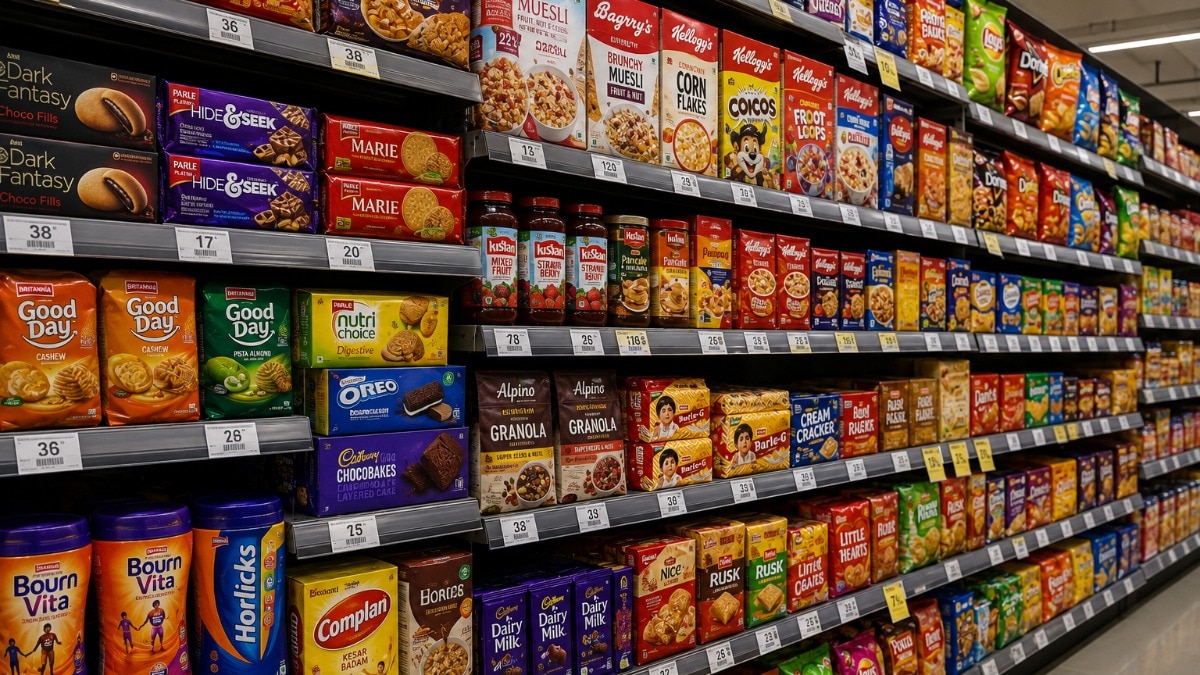
Instead of the bold symbols the Court had earlier suggested, FSSAI had come back with a softer proposal: list recommended daily limits and serving sizes, and let consumers do the maths. The Court was not impressed. It has now given the regulator two more weeks to rethink its stand.
For millions of Indians who buy snacks, biscuits and soft drinks every day, this is not an abstract legal debate. It is about whether a child can tell in two seconds if a packet of chips is high salt, or whether a fizzy drink is high sugar, without needing a calculator.
Supreme Court FSSAI warning labels case: What exactly happened on 13 August?
The current flashpoint comes from a public interest litigation (PIL) filed by non-profit 3S and Our Health Society, asking for mandatory front-of-pack labelling (FOPL) on packaged foods that are high in sugar, salt and fat.
On 10 February 2026, the Supreme Court had already made its position clear in an earlier order: it wanted warning-style labels, prominently on the front of packages, so that consumers could quickly spot risky products.
But in an affidavit filed in August, FSSAI proposed something else:
- Put the nutrient content per 100 g/ml on the pack.
- Add the serving size.
- Show the recommended daily limits for added sugar, saturated fat and salt.
- Skip simple warning symbols that say “High in sugar” or “High in salt”.
On 13 August 2026, the bench questioned this move, asking bluntly whether the government “does not want its people to be healthy” and whether industry pressure was driving the regulator’s hesitation.
The Court:
- Said front-of-pack warning labels are essential, especially to protect children who are getting hooked on ultra-processed junk food.
- Rejected arguments that such labels would unfairly hurt business or mislead people about traditional foods.
- Emphasised that commercial interests cannot override public health.
- Gave the Centre and FSSAI two weeks to reconsider and present a final, stronger proposal.
The case now hangs on what FSSAI brings back to the bench in that short window.
Why front of pack labelling for junk food in India became a battleground
The fight over front of pack labelling junk food India did not start this month. It has been simmering for nearly a decade.
Key milestones:
- 2013–2014: The World Health Organization (WHO) identifies front-of-pack labels as one of the most cost-effective tools to tackle non-communicable diseases (NCDs) like diabetes and heart disease.
- 2014 onwards: FSSAI begins discussing a national FOPL regulation, sets up expert committees and conducts stakeholder consultations.
- 2019–2022: India debates multiple models: warning symbols, traffic light labels (red-amber-green), and a Health Star Rating (HSR) system similar to Australia’s.
- 2022–2023: Civil society groups and independent nutrition experts criticise HSR as too weak for ultra-processed foods. They argue that simple “High in sugar/salt/fat” warnings work better than stars that can be gamed by adding artificial fibre or sweeteners.
- 2024: The NGO 3S and Our Health Society moves the Supreme Court, arguing that FSSAI has delayed too long and that a clear warning system is essential.
- February 2026: The Supreme Court, unconvinced by FSSAI’s progress, explicitly calls for warning-style front-of-pack labels.
- August 2026: FSSAI instead proposes a more technical, numbers-heavy format – triggering the current backlash from the Court.
The core disagreement is simple:
- Public health advocates and the Court want quick, intuitive warnings that tell people, in one glance, if a product is unhealthy.
- Industry and, currently, FSSAI’s proposal lean towards information-heavy labels that require consumers to interpret numbers, percentages and daily values.
Globally, countries like Chile, Mexico, Brazil and Israel have already adopted bold black-and-white warning symbols for foods high in sugar, salt or saturated fat. Research from these countries shows reductions in purchases of high-sugar drinks and reformulation of products to avoid warning symbols.
India is still deciding whether to follow that path or take a more complex route.
What “high sugar high salt food warning India” really means
When you hear the phrase “high sugar high salt food warning India” in news debates, it is about drawing a red line for three nutrients that drive our disease burden:
- Free/added sugar
- Sodium (salt)
- Saturated fat
WHO and many national regulators classify a product as “high in” when it crosses certain thresholds per 100 g/ml. While India has not yet locked in its exact cut-offs for FOPL, typical ranges globally are:
- Around 10–15 g of sugar per 100 ml for beverages.
- Around 1 g of sodium (≈2.5 g salt) per 100 g for solid foods.
- Around 10 g or more saturated fat per 100 g.
Why this matters in India:
- India has seen a sharp rise in type 2 diabetes, hypertension and obesity, increasingly among younger adults and children.
- A growing share of calories now comes from ultra-processed foods: flavoured chips, instant noodles, sweet biscuits, chocolate spreads, soft drinks, energy drinks and frozen snacks.
- These products are often marketed as “baked”, “multigrain”, “no added preservatives” or “energising”, while still being high in sugar, salt and fat.
The proposed high sugar high salt food warning India system is meant to cut through this marketing noise.
If you pick up:
- A sweet biscuit with 20–25 g sugar per 100 g.
- A namkeen with very high sodium per 100 g.
- A soft drink with 10–11 g sugar per 100 ml.
A strong FOPL system would put a clear “High in sugar” or “High in salt” or “High in saturated fat” symbol on the front of the pack, not hidden near the nutrition table.
FSSAI, Supreme Court and industry pressure: What’s really at stake
In this FSSAI Supreme Court industry pressure moment, three forces are pulling in different directions.
1. The Supreme Court
The Court has signalled it is willing to go far if the executive does not act. It has:
- Questioned the delay as unacceptable for an urgent public health issue.
- Indicated that if the Centre and FSSAI “cannot do it”, the Court may have to set the contours of the labelling regime itself.
- Focused repeatedly on the right to health and right to information for consumers.
2. FSSAI
FSSAI’s latest proposal is built around “more information, less signalling”:
- It wants to show daily recommended limits alongside nutrient values.
- This shifts the burden of interpretation onto consumers.
- The regulator has argued that warning symbols might unfairly stigmatise products and confuse traditional foods.
The Supreme Court, however, has questioned whether this approach truly serves ordinary shoppers or makes life easier for big food and beverage companies.
3. The packaged food industry
The industry stands to lose if:
- Highly popular snacks, biscuits and soft drinks must carry multiple warning logos.
- Schools or government programmes start avoiding products with warnings.
- Consumers begin shifting away from products with bold “high in” labels.
Behind the scenes, large manufacturers have lobbied for:
- Star ratings that allow some unhealthy products to still look “acceptable”.
- More generous nutrient thresholds, so fewer products qualify as “high in”.
- Longer transition periods and flexibility.
The Supreme Court’s sharp reference to “corporate pressure” reflects this tension.
What this means for your snacks, biscuits and soft drinks right now
The obvious question for any shopper is: Do I need to stop buying my usual chips, biscuits and soft drinks today?
A few important points:
- No new labels have appeared yet. The Supreme Court has not finalised a specific design or deadline. For now, packs on shelves continue with the existing nutrition facts and ingredient lists.
- The risk is already there. Whether or not the label changes, a packet that is high in sugar, salt or fat is just as risky today as it will be tomorrow.
- Children are the biggest concern. The Court’s comments focused heavily on kids, who are aggressively targeted by advertising and often consume multiple ultra-processed products a day.
Until any new rule takes effect, consumers need to do what strong FOPL would have done for them: decode the back of pack.
Here is how to quickly assess warning label snacks biscuits soft drinks India style, using the current labels.
For soft drinks and sweetened beverages
Look at “Carbohydrate – of which sugars” per 100 ml:
- If it is around 10–11 g per 100 ml, a 250 ml serving gives you 25–27.5 g sugar – almost or more than your entire daily limit of added sugar (often set around 25 g for adults, lower for children).
- “Fruit drink”, “energy drink”, “flavoured water” or “sports drink” often have similar sugar levels to regular cola.
As a rule of thumb:
- More than 5–6 g sugar per 100 ml is moderate to high.
- More than 10 g sugar per 100 ml is high.
For biscuits and cookies
Check per 100 g values:
- Sugar: Above 20 g per 100 g is high. Many cream biscuits cross 30 g.
- Total fat: Above 17–20 g is high; watch for saturated fat specifically.
- Sodium: Even sweet biscuits can carry significant sodium from leavening agents and salt.
Marketing claims like “atta”, “digestive”, “lite” do not guarantee low sugar or fat. Always flip the pack.
For namkeen, chips and savoury snacks
Look at sodium per 100 g:
- A threshold of 400–500 mg sodium per 100 g is already substantial.
- Many packets cross 800–1000 mg per 100 g, especially masala variants.
Also check:
- Total fat and saturated fat.
- Look for repeated mentions of “palm oil” or “vegetable fat”, which usually means high saturated fat.
For breakfast cereals and flavoured yoghurts
“Kids’ cereals” and “fruit yoghurts” often appear healthy, but:

- Many cereals have 10–12 g sugar per 30 g serving, which is already a big chunk of a child’s daily limit.
- Flavoured yoghurts can contain as much sugar as some desserts.
Again, check sugar per 100 g, not just per serving.
The science and regulation behind FOPL: Why experts push for warnings
")
Public health experts argue that front-of-pack warning symbols work better than dense number tables for three main reasons.
1. They are fast and intuitive
Most people:
- Do not have the time or numeracy skills to calculate grams into daily percentages.
- Shop in crowded kirana stores or supermarkets where decisions are made in seconds.
A simple black symbol saying “High in sugar” on the front is far easier to understand than a table that reads “Sugars: 10.8 g per 100 ml; RDA 50 g”.
2. They change both consumer and industry behaviour
Evidence from countries that have adopted warning labels shows:
- Reduced purchases of high-sugar beverages and high-salt snacks.
- Reformulation by manufacturers – for example, cutting sugar just enough to avoid a “high in sugar” warning.
In Chile, within a few years of adopting front-of-pack warnings, studies reported lower sugar and sodium content in many packaged categories and a drop in sugary drink consumption.
3. They protect children and low-literacy consumers
In India, many consumers:
- Do not read English labels comfortably.
- May not understand technical terms like “saturated fat” or “sodium”.
Symbols, especially if supported by public education campaigns in local languages, can bridge this gap.
Regulatory context in India:
- FSSAI already mandates nutrition information panels and ingredient lists.
- It has separate rules for health and nutrition claims, which prohibit misleading statements.
- The missing piece is a simple, mandatory warning system for high-risk products.
The current Supreme Court case pushes FSSAI to close this gap.
What you should do now: A practical label-reading checklist
Until the Court and FSSAI settle the design of front-of-pack labelling junk food India rules, consumers can follow a simple checklist every time they pick up a pack.
- Always check per 100 g / 100 ml
- Sugar red flags
- Foods: >15–20 g per 100 g is high for everyday items like biscuits, cereals, bars.
- Salt (sodium) red flags
- Fat and saturated fat
- Check saturated fat; higher numbers mean more strain on heart health.
- Ignore health halo claims
- Watch frequency, especially for kids
- Prefer plain over ultra-processed
Why this case matters beyond labels
The Supreme Court FSSAI warning labels case is about more than just symbols on packets. It is about:
- Whether public health will be treated as a core regulatory priority.
- Whether citizens’ right to know what they are eating is taken seriously.
- Whether corporate influence can dilute policies meant to curb India’s NCD crisis.
For now, the next key date is within two weeks of 13 August 2026, when FSSAI must return to the Court with a proposal the bench finds credible.
Regardless of what finally appears on the front of your chip packet, one thing is already clear: the era of silent, unlabelled junk food is ending. The only question is whether the new labels will whisper or speak loudly enough for every Indian to hear.
Frequently Asked Questions
What is the Supreme Court FSSAI warning labels case about?
It is a public interest case where the Supreme Court is examining whether India’s food regulator, FSSAI, must mandate clear front-of-pack warning labels on packaged foods high in sugar, salt and saturated fat. The Court has criticised delays and has given FSSAI two weeks to reconsider a weaker, numbers-heavy proposal.
Will snacks, biscuits and soft drinks in India soon carry warning symbols?
The Supreme Court has indicated that pre-packaged foods should have front-of-pack warnings if they are high in sugar, salt or saturated fat, but the exact design and timeline are not yet final. For now, products on shelves still carry only the usual nutrition tables and ingredient lists.
Is it safe to keep buying my usual packaged snacks and soft drinks?
The health risk from high sugar, salt and fat is the same regardless of whether a warning logo exists. If you or your child consume such products frequently, it is sensible to cut back, check sugar and sodium per 100 g/100 ml, and treat ultra-processed snacks and soft drinks as occasional treats, not daily staples.
What did FSSAI propose instead of strong front-of-pack warnings?
In its recent affidavit, FSSAI suggested displaying recommended daily limits for added sugar, saturated fat and salt alongside nutrient values and serving sizes, rather than using bold warning symbols. This approach gives more numbers but leaves consumers to interpret whether a product is high in risky nutrients.
How can I tell if a product is high in sugar, salt or fat until new labels come?
Check the nutrition information per 100 g or 100 ml. As a rough guide, more than 10 g sugar per 100 ml in drinks, more than 15–20 g sugar per 100 g in foods, more than 400–500 mg sodium per 100 g in savoury snacks, and more than 17–20 g total fat per 100 g are all red flags for regular consumption.